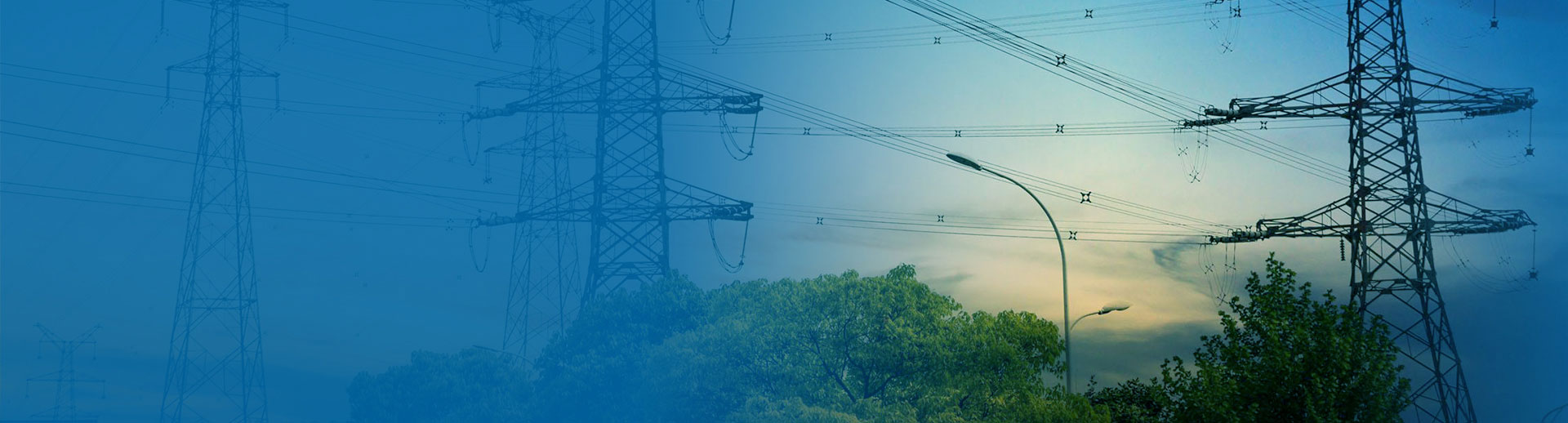
During a routine inspection, an anomaly was discovered on a utility pole, but the exact location and type of the defect could not be determined. The ULIRVISION technical team then went to the site with acoustic and ultraviolet imaging equipment to conduct further inspections.
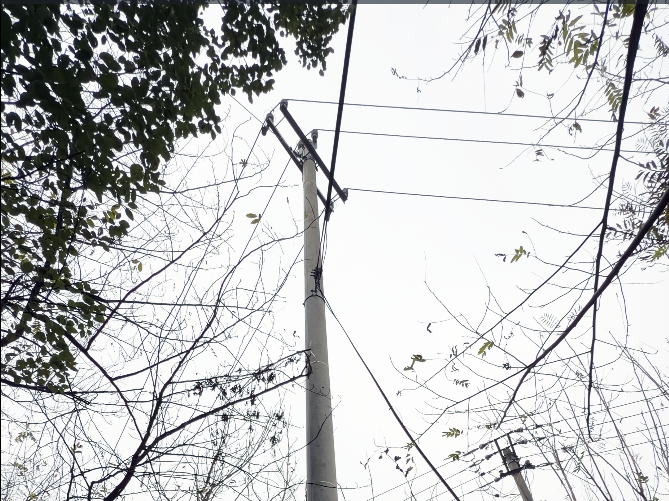
Outdoor overhead power lines (utility poles + insulator assemblies), surrounded by trees.
1. Acoustic Imaging Camera TS138

1.1 Detection Results
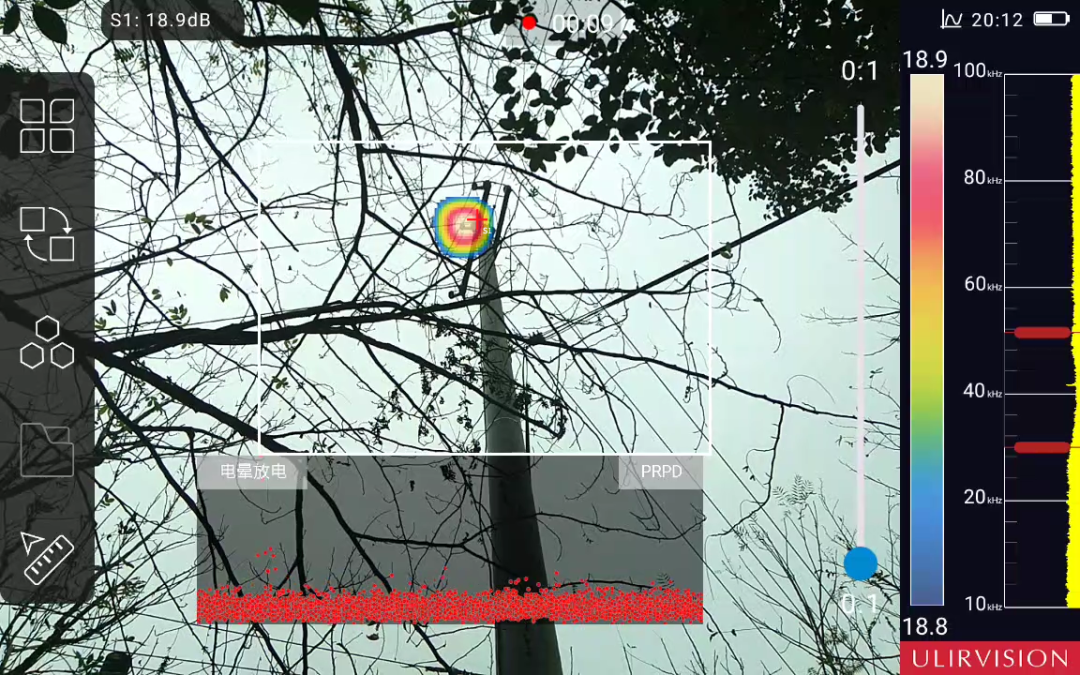
Scene: an outdoor utility pole. There was virtually no sound interference at the site, and the discharge sound was inaudible to the human ear. The surface condition of the object at high altitude was also not visible to the naked eye. ULIRVISION acoustic imaging camera TS138 detected a partial discharge point on a component at the top of the utility pole, accurately locating the discharge source. The device interface displayed "PRPD" (Partial Discharge Phase Diagram), indicating that the equipment was simultaneously recording the phase characteristics of the discharge, which helps to determine the discharge type as corona discharge.
This location presents a significant risk of partial discharge and should be prioritized for inspection to further investigate the insulation status of the equipment (such as insulators, wire connectors, etc.) to prevent insulation degradation or failure caused by the discharge.
1.2 Advantages
The TS138 offers advantages such as non-contact measurement, high detection efficiency, and intuitive detection results. It is highly portable and easy to operate, allowing for single-handed operation. It focuses on critical connection points prone to partial discharge, such as power cable joints, overhead lines, composite insulators, and disconnect switches, facilitating detailed inspection. It is suitable for long-distance, large-area inspection work.
2. Airborne Ultraviolet Imaging System TD40S
2.1 Detection Results
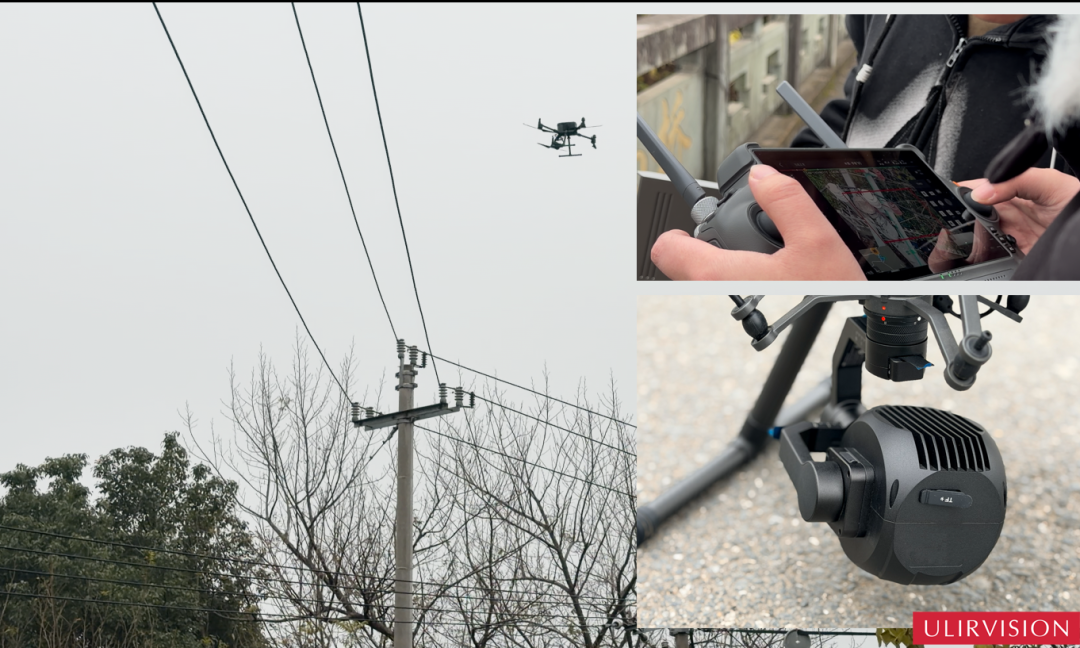
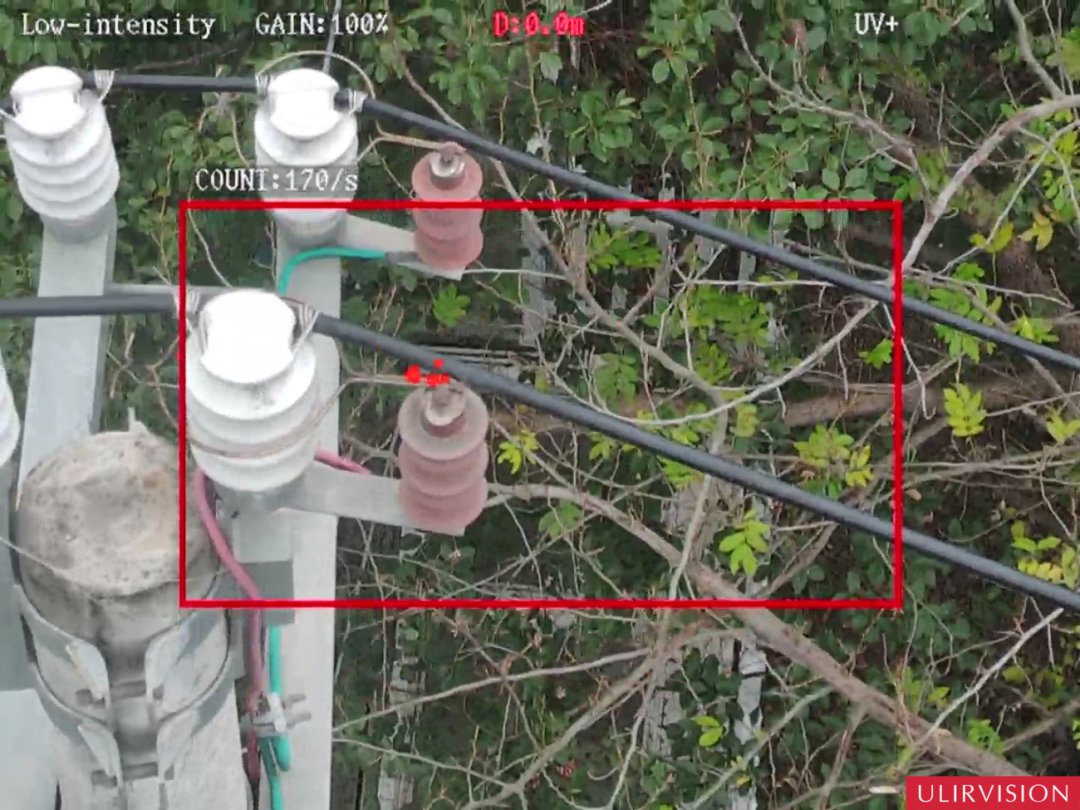
Due to the high height of the utility pole, the numerous surrounding power lines, and the obstruction of the view by tree branches, the airborne ultraviolet imager, using an aerial perspective, accurately located a discharge at the metal connector of the lightning arrester. The discharge intensity at this location was 170 photons/second, which is not very strong.
The preliminary assessment indicates that the discharge is caused by contamination, which will affect the grounding performance. Long-term discharge will accelerate the aging of the lightning arrester's insulation and may even cause line tripping, requiring timely maintenance.
2.2 Advantages
High Efficiency: Drones cover complex terrain, increasing inspection efficiency by 80%;
Precision: Ultraviolet imaging identifies early discharges invisible to the naked eye, increasing defect detection rate by 60%;
Safety: Long-distance non-contact detection ensures personnel safety.