In today's fast-paced industrial world, safety, efficiency, and accuracy are paramount. One tool that has dramatically transformed how engineers and technicians identify problems is the acoustic imaging camera. This innovative technology allows professionals to "see" sound, pinpointing leaks, electrical faults, and mechanical anomalies with unparalleled precision.
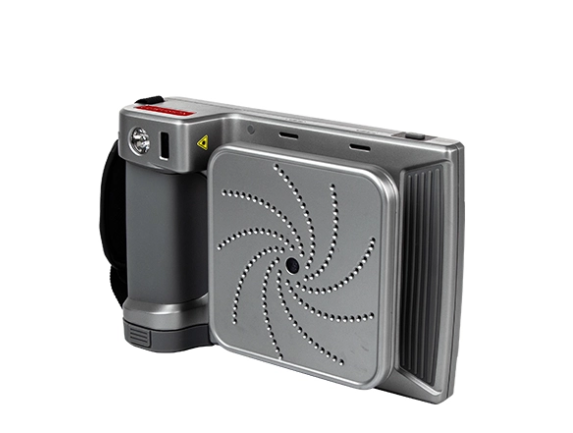
An acoustic imaging camera is a device designed to detect, visualize, and analyze sound waves from equipment or industrial environments. Unlike traditional inspection methods, which rely heavily on manual detection or guesswork, acoustic cameras create a visual map of sound sources in real time.
Think of it as a thermal camera for sound: the camera identifies ultrasonic or audible noise emissions and translates them into an intuitive visual format. This enables technicians to quickly locate issues such as:
Compressed air or gas leaks
Electrical corona discharges
Mechanical vibrations and bearing faults
Valve and pipe system malfunctions
Industries face constant pressure to reduce downtime, improve safety, and cut operational costs. Acoustic imaging cameras offer a practical solution. Here's why:
Inspecting high-voltage equipment, pressurized pipelines, or rotating machinery can be dangerous. Acoustic cameras allow technicians to perform inspections from a safe distance, significantly reducing the risk of accidents.
Traditional methods like ultrasonic detectors or stethoscopes are time-consuming and often require multiple trips. Acoustic imaging cameras can quickly scan an entire facility, pinpointing faults with centimeter-level accuracy.
Leaks and equipment inefficiencies can lead to massive energy losses. Detecting these issues early prevents costly repairs and production stoppages. According to the U.S. Department of Energy, compressed air leaks alone can account for up to 30% of industrial energy waste.
Modern acoustic imaging cameras capture high-resolution visual sound data. This documentation is invaluable for maintenance records, compliance audits, and operational optimization.
Acoustic imaging cameras are versatile tools that serve multiple sectors, often complementing traditional thermal imaging products to provide a comprehensive predictive maintenance solution:
Detect corona discharge in high-voltage systems
Locate arcing, partial discharges, and faulty insulation
Identify worn bearings and rotating equipment anomalies
Monitor valve leaks and pipeline vibrations
Detect compressed air or gas leaks
Reduce energy consumption and improve sustainability
Inspect pipelines for leaks
Ensure compliance with safety standards
The core technology behind acoustic imaging cameras is beamforming, a process that measures the time delay between sound signals captured by multiple microphones. The camera then converts these signals into a visual image, allowing users to "see" exactly where the noise originates.
Sound Detection: Microphone arrays capture sound waves from multiple directions.
Signal Processing: Advanced algorithms filter noise and amplify significant sound sources.
Visualization: The processed data generates a color-coded image, highlighting the intensity and location of each sound.
Analysis & Reporting: The operator can zoom, record, and generate reports for maintenance or audit purposes.
This technology not only saves time but also increases the accuracy of fault detection, reducing the risk of missed issues.
When selecting an acoustic imaging camera, consider the following:
Frequency Range: Ensure the camera can detect the specific frequencies of your equipment or leaks.
Environmental Safety: Use explosion-proof models like the TS138EX for hazardous areas.
Portability: Lightweight and battery-powered cameras are ideal for on-site inspections.
Data Analysis Features: Look for integrated software that simplifies reporting and documentation.
With these considerations, industrial operators can maximize ROI, enhance safety, and streamline maintenance processes.
1. What industries benefit most from acoustic imaging cameras?
Electrical, mechanical, oil & gas, and energy efficiency sectors are the most common users.
2. Can acoustic imaging cameras detect gas leaks?
Yes, they can pinpoint leaks in compressed air, natural gas, and other pressurized systems.
3. How far can these cameras detect sounds?
Detection range depends on frequency and environment, but most industrial cameras can detect sources up to 50 meters.
4. Are acoustic imaging cameras safe in explosive environments?
Yes, models like the TS138EX are certified for explosion-proof applications.
5. Do these cameras require special training to use?
They are designed for user-friendly operation, but basic training helps interpret the visualized sound data accurately.