Temperature screening has become an important part of health, safety, and facility management across many industries. From airports and transportation hubs to factories, hospitals, schools, and commercial buildings, organizations need efficient ways to monitor large numbers of people without disrupting daily operations.
A body thermal camera offers a fast, non-contact solution for identifying individuals with elevated skin temperatures. Unlike traditional thermometers that require close-range measurements, thermal imaging systems can screen multiple people simultaneously while maintaining a smooth flow of movement.
As thermal imaging technology continues to evolve, modern systems provide greater accuracy, easier deployment, and more cost-effective solutions for organizations seeking reliable temperature monitoring.
Traditional temperature checks can become inefficient when hundreds or thousands of people need to be screened daily. Manual methods often require close interaction and can create bottlenecks at entrances.
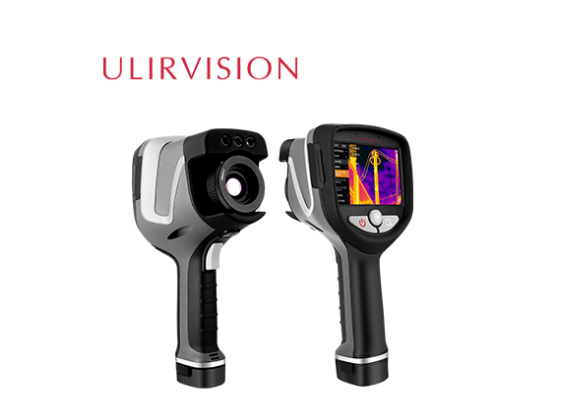
A human body thermal camera addresses these challenges by capturing infrared radiation emitted from the skin and converting it into a thermal image. The system quickly identifies temperature variations and highlights individuals who may require further assessment.
| Screening Method | Contact Required | Screening Speed | Suitable for Crowded Areas |
|---|---|---|---|
| Handheld Thermometer | Yes | Moderate | Limited |
| Infrared Forehead Thermometer | No | Moderate | Moderate |
| Body Thermal Camera | No | High | Excellent |
Because screening is performed remotely, thermal imaging solutions help improve efficiency while reducing direct contact between staff and visitors.
A temperature imaging camera does not measure internal body temperature directly. Instead, it detects infrared energy emitted from the skin surface and converts it into a visual thermal image.
The system analyzes temperature patterns and identifies individuals whose skin temperature exceeds a predefined threshold. In many installations, thermal imaging cameras are combined with intelligent software that automatically generates alerts when elevated temperatures are detected.
The effectiveness of a body thermal camera depends on several factors:
Camera resolution
Thermal sensitivity
Environmental conditions
Proper installation
Calibration procedures
When correctly deployed, thermal imaging provides a fast and practical first layer of temperature screening.
Organizations increasingly choose thermal imaging because it can support both safety objectives and operational efficiency.
A modern thermal digital camera can continuously monitor entry points without interrupting the movement of employees, visitors, or passengers. This makes thermal screening particularly useful in environments where high throughput is essential.
Common applications include:
Airports and transportation terminals
Hospitals and healthcare facilities
Manufacturing plants
Educational institutions
Government buildings
Large public venues
In these settings, thermal imaging allows security and facility teams to focus attention on potential concerns while maintaining smooth access control procedures.
Not every thermal imaging system is designed for the same use case. Selecting the appropriate solution requires evaluating operational needs, environmental conditions, and budget considerations.
| Feature | Benefit |
|---|---|
| Thermal Resolution | Provides clearer temperature visualization |
| Real-Time Alerts | Enables faster response to elevated temperatures |
| Software Integration | Simplifies monitoring and reporting |
| Multi-Person Screening | Improves efficiency in busy locations |
| Portability | Supports temporary or mobile deployments |
Organizations with limited budgets often search for a thermal imaging camera cheap enough to fit operational requirements without sacrificing performance. While affordability is important, reliability and image quality should remain primary considerations.
Similarly, some facilities explore an affordable infrared camera solution for temporary screening stations, visitor management programs, or supplementary monitoring applications.
Advances in sensor technology are making thermal imaging more accessible than ever before. Compact devices, enhanced software analytics, and flexible connectivity options have expanded deployment possibilities across industries.
For example, a USB thermal imaging camera can provide a portable thermal monitoring solution for mobile workstations or temporary inspection points. Meanwhile, larger fixed-installation systems offer continuous monitoring for facilities with high daily traffic.
As thermal imaging technology becomes more affordable and user-friendly, organizations can implement temperature screening programs without the complexity that once accompanied advanced thermal systems.
The growing availability of infrared thermal imaging camera cheap solutions has also helped smaller organizations access technology that was previously limited to larger enterprises.
A body thermal camera has become a valuable tool for organizations seeking efficient, non-contact temperature screening in busy environments. By combining rapid detection, operational efficiency, and scalable deployment options, thermal imaging systems help support safety initiatives while minimizing disruption to daily activities.
Whether used in healthcare, transportation, education, manufacturing, or public facilities, modern thermal imaging technology continues to provide practical solutions for high-volume temperature monitoring and facility management.
A body thermal camera is used to identify individuals with elevated skin temperatures through non-contact thermal imaging, helping organizations conduct efficient temperature screening.
Accuracy depends on camera quality, calibration, environmental conditions, and installation practices. Professional systems generally provide reliable screening when properly configured.
No. A body thermal camera measures skin surface temperature and is typically used as a preliminary screening tool rather than a medical diagnostic device.
A USB thermal imaging camera may be suitable for smaller-scale applications, but high-traffic environments often require dedicated thermal screening systems with advanced analytics.
Organizations should evaluate thermal resolution, detection accuracy, software integration, screening capacity, environmental suitability, and long-term reliability in addition to overall cost.