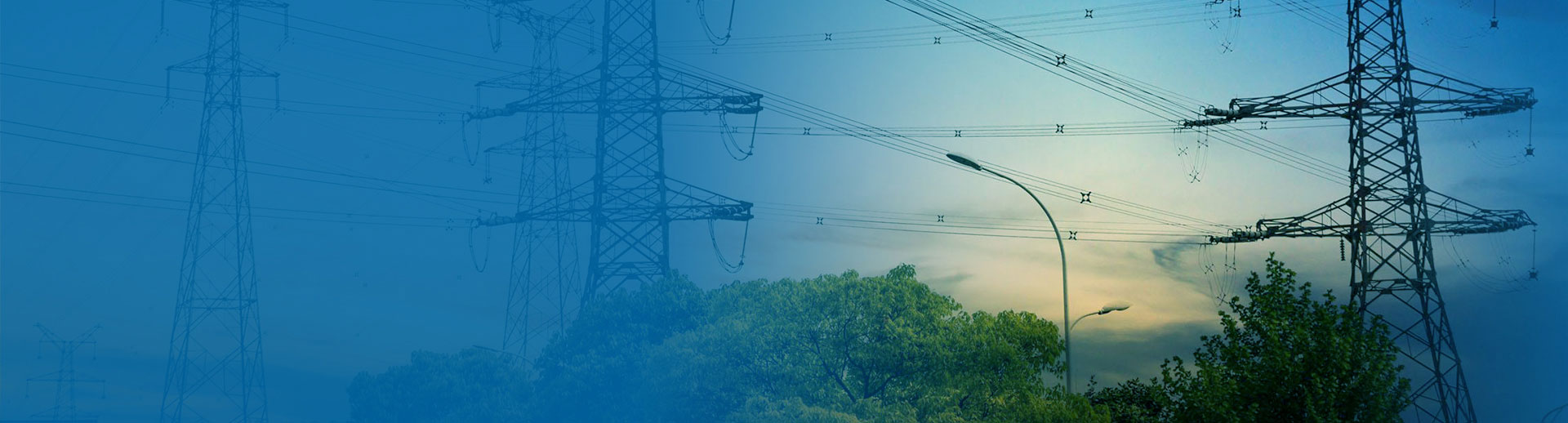
Corona discharge is one of those hidden problems that rarely makes itself obvious. You won't see it with your own eyes, and by the time you hear it humming or crackling, the damage may already be well underway. That is exactly why an increasing number of electrical utilities, maintenance contractors and research institutes are turning to a dedicated corona camera.
If your work involves inspecting overhead transmission lines, high-voltage substations or any equipment operating at elevated voltages, understanding how this technology works could change the way you approach predictive maintenance.
A standard digital camera captures visible light. A corona discharge camera does something fundamentally different — it detects ultraviolet radiation emitted during corona activity. When an electric field becomes strong enough to ionize the surrounding air, it produces a faint UV glow before any visible spark or heat develops. That UV signal is the early warning you want to catch.
Corona cameras use a “solar-blind” UV sensor combined with a high-definition visible-light camera. The solar-blind design blocks most solar UV radiation, which means you can scan equipment in broad daylight and still pick up the faint UV glow from corona. The two images are overlaid in real time, so you can see exactly where the discharge is happening on the physical equipment.
One of the biggest challenges in corona detection used to be sunlight. The sun emits UV radiation across virtually the same spectrum that corona produces, so early detectors struggled to distinguish between background solar UV and actual discharge signals. Modern UV imaging cameras solve this problem through optical filters that only allow specific UV wavelengths — typically below 280 nm — to reach the sensor.
This band is largely absorbed by the Earth's atmosphere, which means sunlight does not interfere with it. The result is a detection system that works reliably in full daylight, rain, fog, or haze, making it practical for real-world field use.
Corona discharge often appears long before insulation failure, flashover or equipment breakdown occurs. By detecting these early-stage signs, maintenance teams can schedule targeted interventions rather than reacting to costly unplanned outages. An ultraviolet camera turns invisible discharge into visible, actionable intelligence.
Some detection methods can only tell you that a problem exists somewhere in a general area. A corona camera shows you the precise spot — down to specific insulator sheds, bushing seals, or terminal connections — where discharge is occurring. That level of accuracy saves hours of troubleshooting and prevents unnecessary component replacements.
Traditional inspection methods often require personnel to get close to energized equipment, climb structures, or even shut down lines. Corona cameras allow you to detect faults from a safe distance, keeping workers away from live conductors while the grid continues operating.
The list of scenarios where a UV sensitive camera adds value is growing as more industries recognize its potential.
Transmission line inspection – scanning towers, conductors, and insulators for corona hotspots along long-distance corridors
Substation monitoring – checking bushings, circuit breakers, and terminal connections where field stress concentrates
Transformer assessment – inspecting external bushings and cooling components for surface discharge caused by contamination or wear
Railway electrification – examining overhead catenary systems and insulators for corona activity along rail corridors
UAV-mounted inspections – fitting lightweight UV imaging modules onto drones to survey hard-to-reach assets without ground access
For companies looking for a reliable UV camera for sale, ULIRVISION offers a range of models from handheld units for daily substation rounds to multi-sensor systems that combine UV, thermal, visible and laser modules in one package.
Not all corona cameras deliver the same performance. Here are a few things to check before making an investment:
Sensitivity rating – Higher sensitivity means you can detect weaker corona signals from greater distances. Look for meaningful numbers rather than marketing claims.
Image overlay accuracy – The UV image must align precisely with the visible background for accurate pinpointing.
Daylight operation – A true solar-blind design should work at noon on a sunny day without false signals.
Portability and battery life – Field inspections can run for hours. The camera should keep pace.
Data recording and reporting – Built-in photo and video capture, GPS tagging, and report generation tools turn raw detection into professional documentation.
The most effective approach combines corona imaging with existing maintenance routines. Infrared cameras detect thermal anomalies, while corona cameras pick up voltage-related discharge. Used together, they give you a far more complete picture of equipment health.
For critical assets such as transformers and circuit breakers, scheduling routine UV scans during planned outages — or even as part of live-line inspections — helps you track discharge trends over time and prioritize repairs based on real condition data rather than fixed schedules.
Q: Can a corona camera detect discharge through enclosures or barriers?
A: No. UV radiation cannot pass through solid materials such as metal enclosures, concrete walls, or most plastics. The camera requires a direct line of sight to the energized equipment surface where discharge is occurring.
Q: Does weather affect detection accuracy?
A: Modern solar-blind corona cameras perform well in fog, light rain, haze, and full sunlight. Heavy rain or dense snow may reduce visibility, but the UV detection itself remains functional.
Q: What is the typical detection range for a corona camera?
A: Depending on the model and sensitivity rating, hand-held corona cameras can detect corona from a few meters up to 100 meters or more. Some airborne systems are effective from significantly greater distances.
Q: Do I need special training to operate a corona camera?
A: Basic operation is typically straightforward. However, for professional inspections, understanding how to interpret discharge intensity, differentiate between acceptable and critical corona, and integrate results into maintenance plans requires practical experience and domain knowledge.
Q: How does an ultraviolet camera compare to ultrasonic or infrared detection for corona?
A: All three methods have strengths. UV imaging provides visual location and real-time confirmation; ultrasonic detection is useful for non-line-of-sight listening; infrared detects thermal effects from established faults. The most effective predictive maintenance programs often combine them.