Substations play a critical role in the safe operation of power systems by handling the transformation, distribution, and transmission of electrical energy. Many substation failures do not occur suddenly; instead, they stem from latent issues such as gradual temperature rises, aging connections, poor contact, and equipment overloading. These hidden hazards often lie in the blind spots of routine inspections, accumulating over time until they trigger major safety incidents—such as circuit trips, equipment burnout, or total station shutdowns.
Traditional substation inspection methods are no longer adequate for meeting today’s high standards of operation and maintenance. Manual inspections rely heavily on the experience of veteran technicians, yet the human eye cannot detect subtle temperature differences, and handheld temperature-measuring devices often lack precision and fail to provide comprehensive coverage. Furthermore, inspecting high-altitude equipment, enclosed cabinets, and high-risk live equipment.
Manually is not only difficult and inefficient but also entails significant safety risks. Crucially, traditional inspection methods often require power outages, which compromise the stability of regional power supplies and substantially increase the time and labor costs associated with maintenance.
Leveraging core infrared thermal imaging technology—characterized by non-contact, visual, and all-weather capabilities—ULIRVISION focuses deeply on temperature monitoring and O&M in the power sector, addressing the pain points of traditional inspections with precise, efficient, and safe intelligent detection solutions.
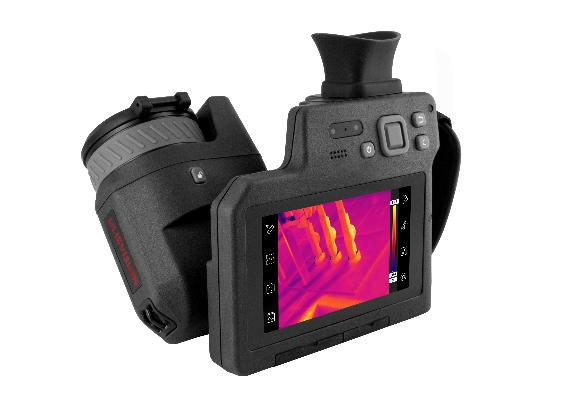
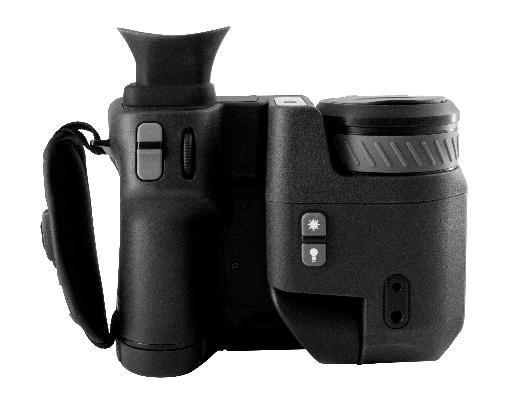
ULIRVISION T70 thermal Camera ULIRVISION T70 thermal Camera
During substation operations, many equipment failures follow a common progression:
Poor Contact → Increased Resistance → Localized Heating → Abnormal Temperature Rise → Equipment Damage
Traditional manual inspections rely primarily on judgment based on experience, which is difficult to detect internal equipment faults or early-stage thermal defects.
Infrared thermal imaging technology, however, visually presents the surface temperature distribution of equipment in the form of thermal images, enabling:
Live testing—no power outage required
Long-range measurement enhances inspection safety
Rapid detection of abnormal hotspots
Trend analysis of equipment operating status
Provides data-driven support for condition-based maintenance
Infrared thermal imaging camera applications on substations:
Main transformer inspection
High-voltage switchgear inspection
Disconnector temperature monitoring
Busbar connection point inspection
Cable joint inspection
Capacitor and reactor inspection
Auxiliary inspection of GIS equipment
ULIRVISION thermal camera allows operations and maintenance personnel to quickly pinpoint areas of potential failure, effectively visualizing hidden hazards.
Environment | Overcast, temperature 24°C, humidity 70%, detection distance 12.0 m, emissivity 0.9 | ||
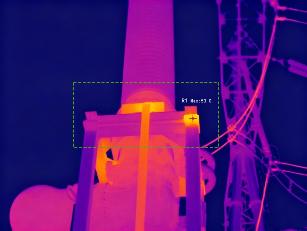
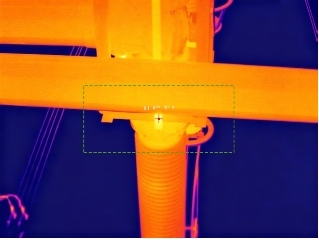
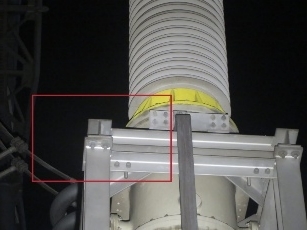
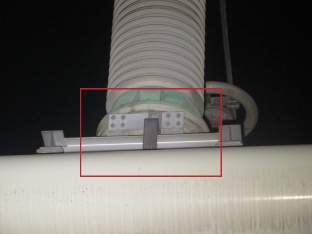
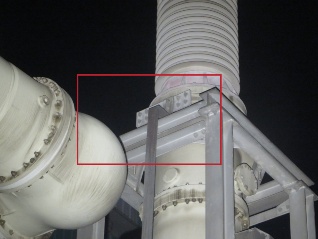
Thermal Hotspots | GIS Bushing Support Structure, Phases A and C | ||
Equipment | ULIRVISION T70 Thermal Camera | ||
Conclusion | General abnormality | ||
Thermal Signatures | Characterized by overheating of localized housing surfaces, connecting screws, and the riser base. | ||
Failure Features | Eddy currents from load leakage flux | ||
Phase Temp (°C) | Phase A: 53°C | Phase B: 35.5 °C | Phase C: 47.3°C |
IR image |
|
|
|
Visible image |
|
|
|
Temp Difference | A:17.5K/C:11.8K | Relative Temp Diff (%) | A:60%/C:50.6% |
Based on the diagnostic criteria for current-related defects in live electrical equipment as specified in DL/T 664-2025 (*Code for Application of Infrared Diagnosis of Live Electrical Equipment*), defect classifications are defined as follows: general anomaly (δ ≥ 35%, but the hotspot temperature does not reach the threshold for a severe anomaly); severe anomaly (85°C ≤ hotspot temperature ≤ 105°C); and critical anomaly (hotspot temperature > 105°C).
The issue is characterized by heating in the support structure of the GIS bushings (Phases A and C), with distinct hotspots. For Phase A, the hotspot temperature is 53°C, the maximum temperature difference compared to the normal phase is 17.5 K, and the relative temperature difference is 60%. For Phase C, the hotspot temperature is 47.3°C, the maximum temperature difference compared to the normal phase is 11.8 K, and the relative temperature difference is 50.6%. Consequently, the heating observed in this equipment is classified as a general anomaly; it is recommended to perform maintenance during a scheduled outage and to plan tests and repairs to rectify the defect.
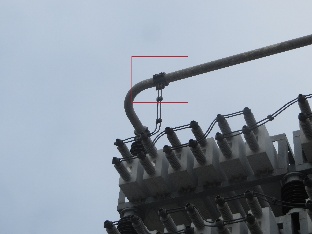
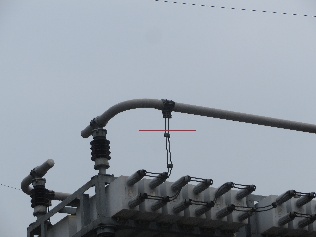
Environment | Overcast, temperature 24°C, humidity 76%, detection distance 12.0 m, emissivity 0.9 | ||
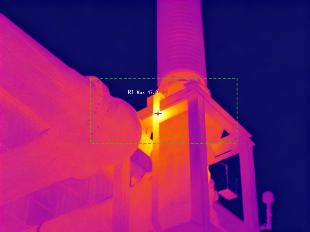
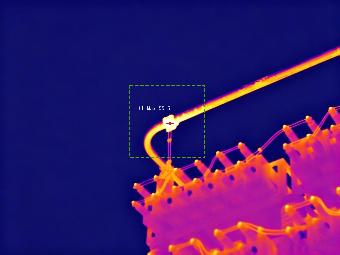
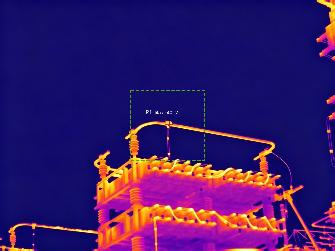
Thermal Hotspots | Capacitor LV Bus Joint, Phase A | ||
Equipment | ULIRVISION T70 Thermal Camera | ||
Conclusion | General abnormality | ||
Thermal Signatures | Prominent hotspot centered on the clamp and joint | ||
Failure Features | Poor contact | ||
Phase Temp (°C) | Phase A: 55.5°C | Phase B: 40.2°C | Phase C: 40.6°C |
IR image | | | |
Visible image |
|
|
|
Temp Difference | 15.3K | Relative Temp Diff (%) | 48.5% |
Based on the diagnostic criteria for current-related thermal defects in equipment—as outlined in DL/T 664-2025 *Code for Application of Infrared Diagnosis for Energized Electrical Equipment*—defect severity is classified into three levels: "general anomaly" (δ ≥ 35%, but the hotspot temperature does not reach the threshold for a "severe anomaly"); "severe anomaly" (100°C ≤ hotspot temperature ≤ 140°C or δ ≥ 80%, but the hotspot temperature does not reach the threshold for a "critical anomaly"); and "critical anomaly" (hotspot temperature > 140°C or δ ≥ 95% with a hotspot temperature > 100°C).
The case involves overheating at the Phase A tubular busbar connection of the low-voltage capacitor tower, characterized by a distinct hotspot. The hotspot temperature for Phase A was 55.5°C, with a temperature difference of 15.3 K relative to the normal reference and a relative temperature difference of 48.5%. Consequently, the overheating is classified as a "general anomaly." It is recommended to monitor the progression of the defect, perform maintenance during scheduled outages, and systematically arrange for testing and repairs to rectify defects.
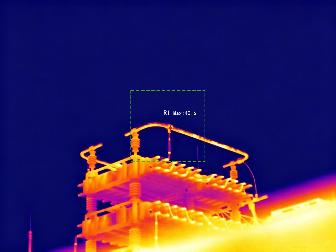
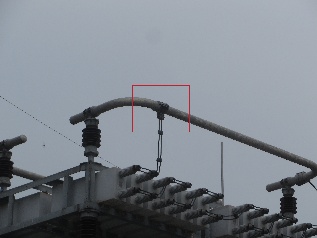
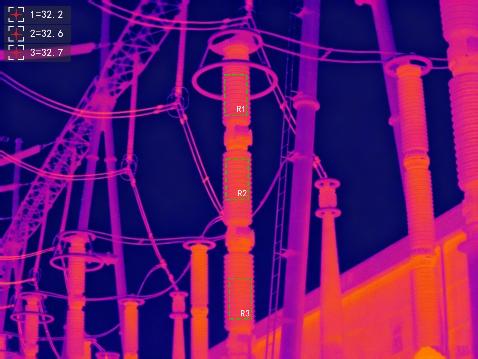
Environment | Overcast, temperature 24°C, humidity 69%, detection distance 12.0 m, emissivity 0.9 | ||
Equipment | ULIRVISION T70 Thermal Camera | ||
Conclusion | No significant thermal anomalies detected. Status normal. | ||
Temp (°C) | R1: 32.2°C | R2: 32.6°C | Phase C: 32.7°C |
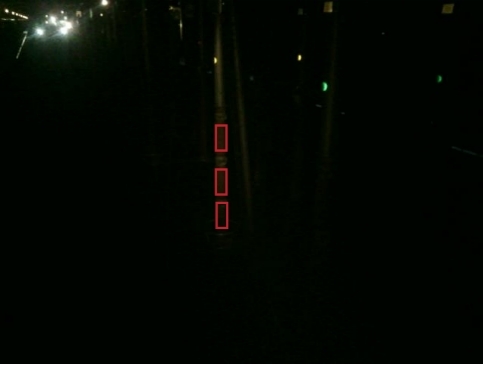
IR image Visible image | |||
Based on the criteria for diagnosing defects in voltage-related thermal equipment as specified in DL/T 664-2025 *Application Specification for Infrared Diagnosis of Live Electrical Equipment*, no significant abnormal heating was detected; therefore, this lightning arrester is considered normal.
Conduct full-scenario temperature monitoring safely without scheduling power outages, equipment contact, or system downtime. By ensuring continuous grid stability and normal operations, this solution completely eliminates financial losses and power supply pressures caused by forced shutdowns.
Leveraging high-precision infrared detection technology, the system accurately captures subtle temperature variations in equipment. It effectively identifies latent faults—such as early-stage aging, loose connections, and overloads—eliminating missed or false detections and enabling the early identification and remediation of potential hazards.
Easily adaptable to challenging environments—such as high-altitude installations, enclosed electrical cabinets, complex outdoor sites, and areas with restricted human access—the system provides all-around coverage for critical equipment like transformers, circuit breakers, busbar joints, lightning arresters, and disconnect switches, eliminating inspection blind spots.
Infrared thermography is more than just a troubleshooting tool—it is the cornerstone of equipment health assessment. By establishing a temperature database, the system enables historical data comparison, temperature rise trend analysis, risk level assessment, and maintenance schedule optimization, driving the evolution of O&M practices from traditional Preventive Maintenance (PM) to advanced Condition-Based Maintenance (CBM)